
The Price of Captivity
Demi-Gods and Semi-DevilsThis flow traces the treatment of civilians and prisoners as rulers and individuals decide whether people are citizens, spoils, or human beings.
increasing Bearing strength in each event
 decreasing
Bearing strength in each eventdecreasingCivilians as Supply
People Reduced to Provisions
Military custom
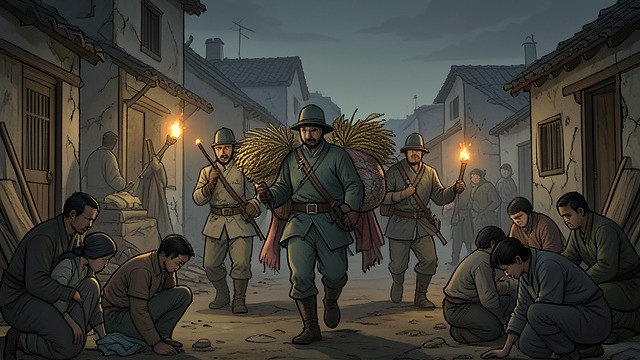
Liao soldiers raid neighboring territories for goods and captives because the army does not supply every need through ordinary provisions. The practice treats civilians as resources in wartime.
Reciprocal harm
Song forces retaliate with raids of their own. The two names for the practice disguise how similar the suffering is across the border.
A Captured Crowd
The Spoils Presented
Human lives displayed
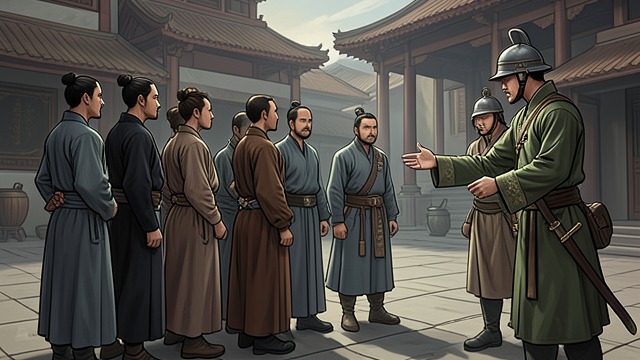
A Liao unit brings hundreds of Song captives to Xiao Feng and offers him the most attractive captives and possessions. The soldiers understand such offerings as customary respect for their commander.
A choice made visible
The captives are frightened and vulnerable, while Xiao Feng has the authority to decide what happens next. Their presence forces an abstract debate about war into a direct human encounter.
The Captives Released
Refusal of Spoils
An order reversed
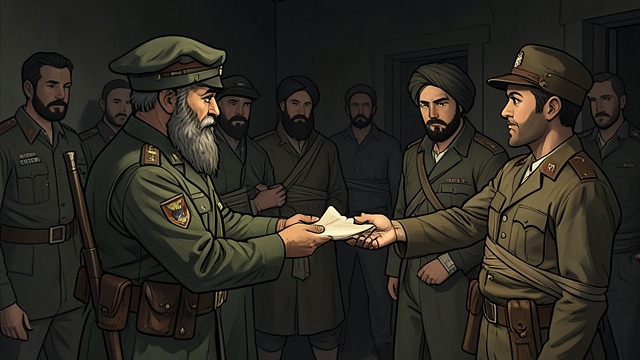
Xiao Feng tells the soldiers to leave the captives behind and return to his residence for rewards. He frees the civilians rather than use them as prizes or targets.
A limited intervention
His decision gives these people a chance to return home but cannot guarantee their safety or change the army's broader practice. It is mercy exercised within, not outside, imperial command.
The Commander's Old Example

Cruelty Normalized
A previous ruler's custom
The soldiers describe using Song people as live targets as something the former Prince of Chu enjoyed. Their casual language reveals how normalized the abuse has become.
Xiao Feng's horror
He imagines the captives hunted as if they were animals. The scene forces him to recognize that service in Liao can make him responsible for practices he finds abhorrent.
A Shared Humanity
The Border Question
A reflection on names
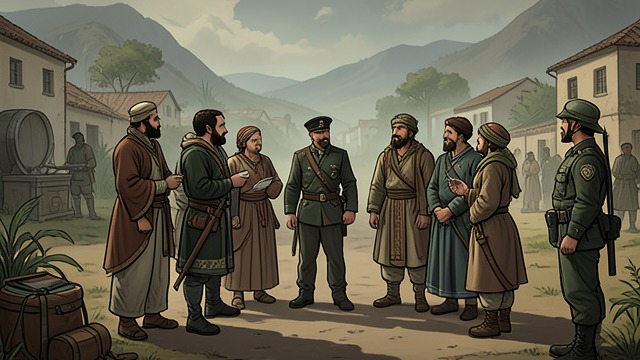
Xiao Feng wonders why Han, Khitan, Jurchen, and Korean identities justify one group raiding another. The released captives' language and customs feel familiar to him.
No easy answer
He remains a Khitan official, but refuses to regard the Song civilians as lesser. His reflection challenges ethnic hatred without offering a simple way to escape political conflict.
When Xiao Feng reflects on border raids
On the road outside Nanjing
Immediately after Xiao Feng questions the prisoners
During the soldiers' explanation of the raid
After Xiao Feng watches the freed captives depart
